
How I Use My Chase Instacart Credits for Free (or Nearly Free) Groceries — Even in a Rural Area
Affiliate Disclosure: This post may contain affiliate links, which means I may earn a small commission at no additional cost to you if you make a purchase through these links. I only recommend products and services I trust and believe will benefit you. I do not sell your personal information, and all opinions expressed in this post are my own.
Editorial Disclosure: Opinions expressed here are the author's alone, not those of any bank, credit card issuer, hotel, airline, or other entity. This content has not been reviewed, approved, or otherwise endorsed by any of the entities included within the post..


Living outside Kansas City means I do most of my grocery shopping the old-fashioned way: lots of planning and big trips to the store every other week. But I’ve figured out a trick to stretch my grocery dollars even further using Instacart credits that come with certain Chase credit cards — especially on the weeks between big grocery runs.
In this post I’ll break down:
- How Instacart credits actually work,
- How I use them for quick pickup orders,
- And exactly which Chase cards offer credits (and how much).
All the card info below is accurate at the time of publication — but check Chase and Instacart directly for updates or enrollment requirements before relying on benefits.
Some credit cards also offer Instacart membership perks and monthly credits. I break down the cards that include these benefits in my guide to credit cards that offer Instacart benefits.
First: How I Actually Use Instacart in Real Life
I don’t do my entire grocery haul with Instacart. Instead, here’s my rhythm:
- Big grocery order every other week: that’s my main food budget.
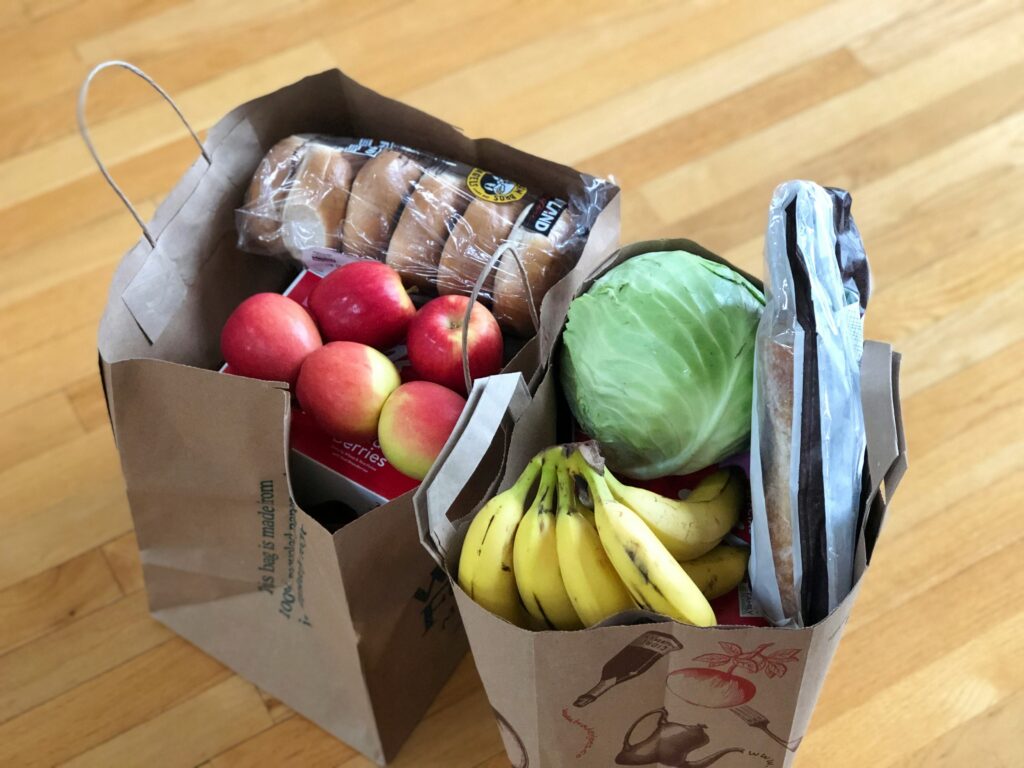
- Instacart pickup during “gap weeks”: when we run out of basics like milk, eggs, bacon, and produce, I place a small Instacart pickup order using my monthly card credits to fill in what we need until the next big shop.
For example, the other day I used my monthly credit to order:
- A gallon of milk
- Bananas
- Bacon
- A can of pumpkin
- Eggs
- A bag of potatoes
After the monthly Instacart credit from my Chase Ink card, I only paid about $3 out of pocket — most of that was a small pickup fee. That’s the kind of practical value I’m talking about.
What You Need to Use These Credits
To get the monthly Instacart credits from your Chase card:
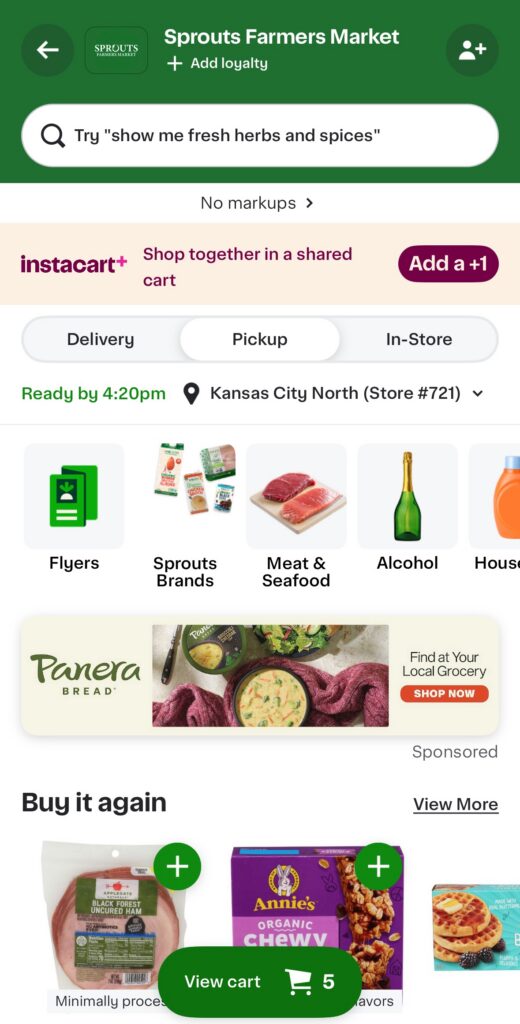
- Create an Instacart account (free).
- Link your eligible Chase card to Instacart and activate the Instacart+ benefit if required.
- Place orders directly through Instacart.com or the Instacart app.
- Use the enrolled Chase card as the payment method at checkout to trigger the credit.
Some credits require an active Instacart+ subscription (which Chase may offer for free temporarily) in order for the credit to post.
Which Chase Cards Offer Instacart Credits
Here’s the current list of Chase cards that include Instacart perks, what each benefit is, and how it works:
💳 $20 Monthly Credits (Best Value)
These business cards offer:
- 3 months of Instacart+ membership (when you enroll during the benefit period)
- $20 monthly Instacart credit each month you have an active Instacart+ membership
Cards that qualify:
- Chase Ink Business Cash® Credit Card
- Chase Ink Business Unlimited® Credit Card
💡 These credits are the most valuable in Chase’s lineup (especially because these cards have $0 annual fees). You must activate and use Instacart+ for the monthly credits to apply.
💳 $10 Monthly Credits with Free Trial (Most Co-Brand Cards)
Many Chase co-branded cards give:
- 3 months of Instacart+ free trial when you enroll
- $10 Instacart credit each month while enrolled
Cards that qualify include:
- Chase World of Hyatt and World of Hyatt Business
- Chase Marriott Bonvoy® cards (Bold, Boundless, Bountiful)
- Chase IHG One Rewards cards (Premier, Premier Business, Traveler)
- Chase Southwest Rapid Rewards cards (Plus, Premier, Priority, Performance Business, Premier Business)
- Travel partner cards like Chase Aer Lingus, British Airways, Iberia, Aeroplan® cards
- Other Chase co-brand consumer and business cards that participate in the Instacart program
💡 These monthly credits are smaller than the Ink business credits, but can still easily cover pickup fees or small orders when used a few times each year.
💳 Chase United Cards (Varied Monthly Credits)
Some United co-branded cards include generous Instacart benefits — but the structure varies:
- United Club℠ and United Club℠ Business Cards:
Complimentary Instacart+ membership plus two $10 credits each month (total $20). - United℠ Quest:
Complimentary 3 months of Instacart+ + one $10 credit on the first order and a $5 credit on the second order each month if Instacart+ is active. - United℠ Explorer and United℠ Business Cards:
Complimentary 3 months of Instacart+ plus one $10 monthly credit while Instacart+ is active.
These cards may also offer Instacart+ beyond the free trial period with renewal options.
How the Credits Work
- You must enroll each eligible card in Instacart using the official Chase/Instacart registration link in order to activate the benefit.
- Credits appear in the Instacart app and apply automatically when you pay with the enrolled card (one card/credit per order).
- Credits expire at the end of each month if unused.
- In many cases, credits only post if you have an active Instacart+ membership — even if the card offered a free trial.
Tips for Maximizing Instacart Credits
Living where grocery trips take more planning, I’ve found that a few best practices make these credits worth it:
1. Use Pickup Instead of Delivery When Possible
Pickup avoids tipping, service fees, and often store price markups that come with delivery services — so more of your credit actually offsets real grocery costs.
2. Plan Orders Around Credits
Since credits reset monthly, plan your Instacart orders early in the month and combine items instead of placing multiple tiny orders. You only get one credit per enrolled card per month.
3. Stack Multiple Eligible Cards (if you have them)
If you hold more than one eligible card (for instance, Ink Business Cash and Ink Business Unlimited), linking both to Instacart can give you two credits per month — though you can only use one per order.
Final Word: Smart, Practical Savings — Not Gimmicky “Free Groceries”
The magic isn’t that Instacart does all your shopping for free. The magic is that these card credits let you:
- Fill in gaps on grocery off-weeks
- Avoid extra trips into town
- Reduce your total grocery spend
- Turn small predictable savings into real-world value
And when you use the credits for practical items — milk, produce, pantry staples — they feel like free groceries in your monthly budget.
Opinions expressed here are the author's alone, not those of any bank, credit card issuer, hotel, airline, or other entity. This content has not been reviewed, approved or otherwise endorsed by any of the entities included within the post.




I found out about points and miles accidentally.
I was researching index funds and happened upon the points and miles community through creators who also post about budgets, financial independence, and investing.
Points and miles allowed those people to travel and work toward financial independence simultaneously.
Thank goodness I got started when I did. The past almost two years of travel have been something we will never forget.
Earning points and miles through credit cards is only a good choice if you have the financial discipline to use them, like cash/debit cards.
Since we started traveling with points and miles, we have had more money going into our investment and savings accounts than ever.
Now I'm excited to teach you!
Welcome

I am excited you are here
New to points and miles? START HERE!

